
What we do
We have brought technology and heritage together since 2012.
We reconstruct spaces that no longer exist, make them visitable and bring them to the device each project needs: a VR headset, the visitor's phone, a screen in the gallery or a projection onto a building.
All with our own team for 3D modelling, development and audiovisual production.
01 — Capabilities
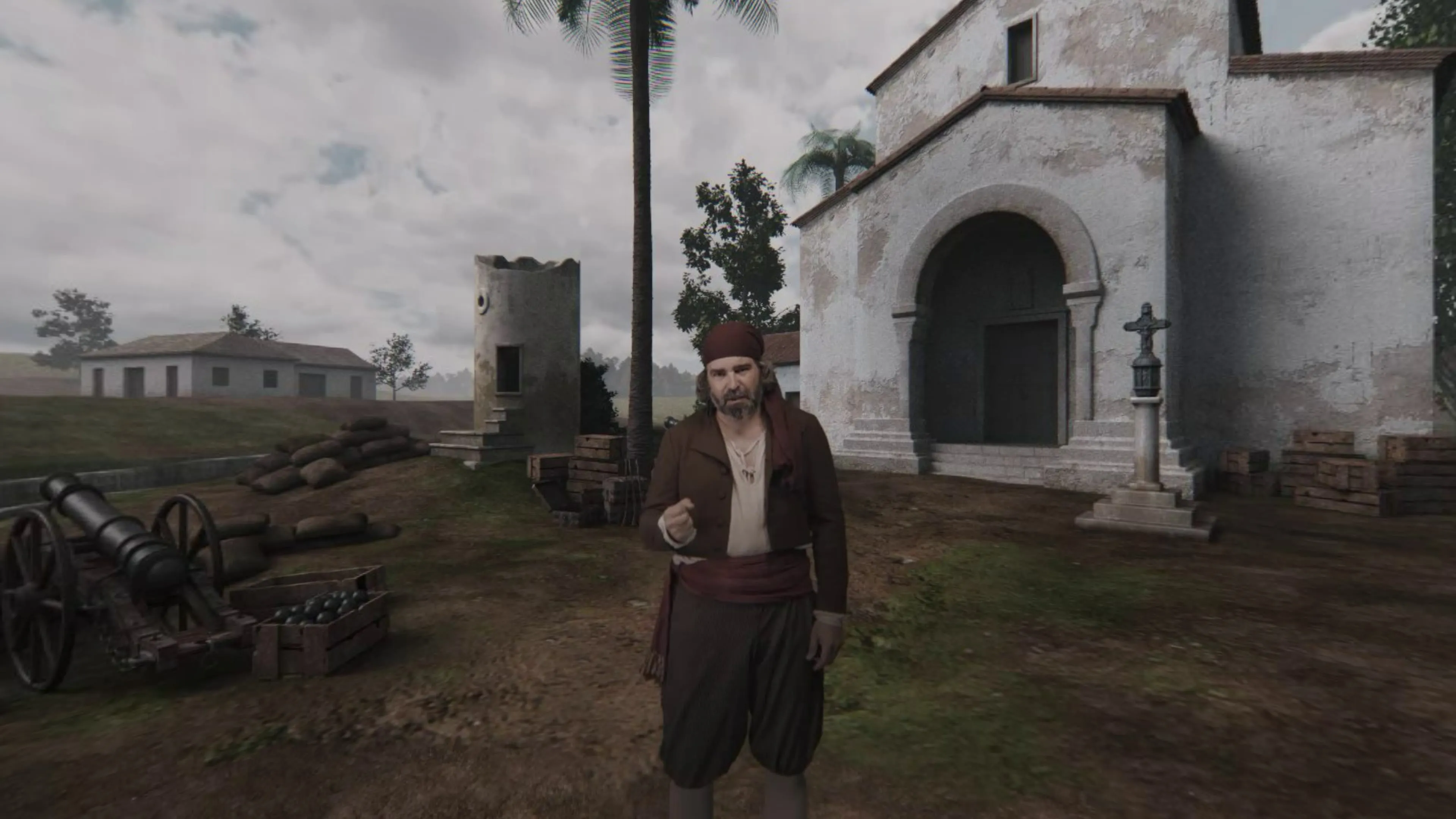
Virtual reality
Historical recreations in which visitors walk, look around and, if the project calls for it, interact with characters.
For museum galleries, interpretation centres, tourist offices and events. We develop for Meta Quest and Apple Vision Pro, and for supervised headsets in the gallery.
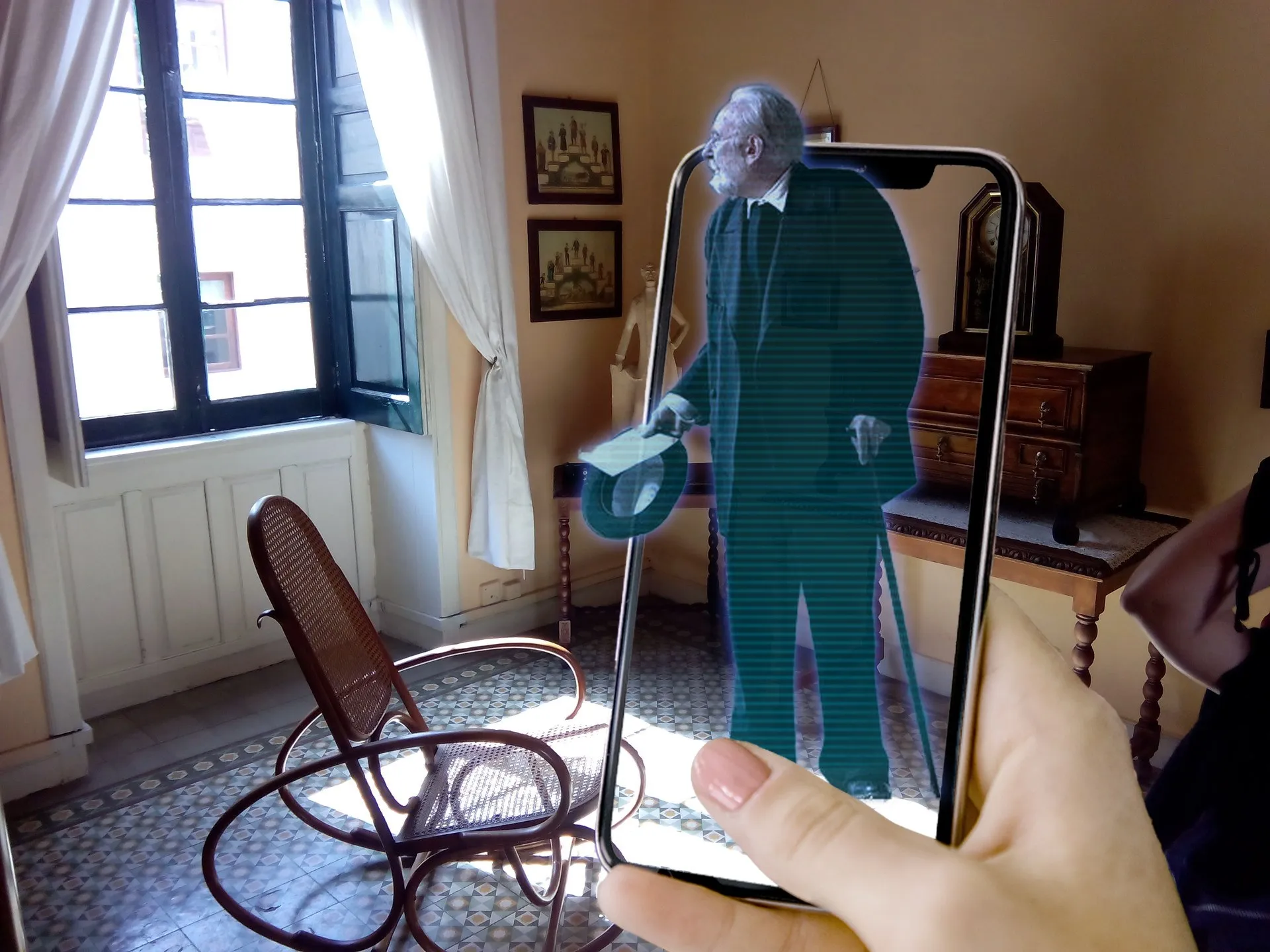
Augmented reality
Digital content on the real space: a character who welcomes the visitor, a panel that turns into a video, a 3D model on a marker, a postcard that shows the whole building.
It works on the visitor's phone without installing anything (WebAR) or in a dedicated app.
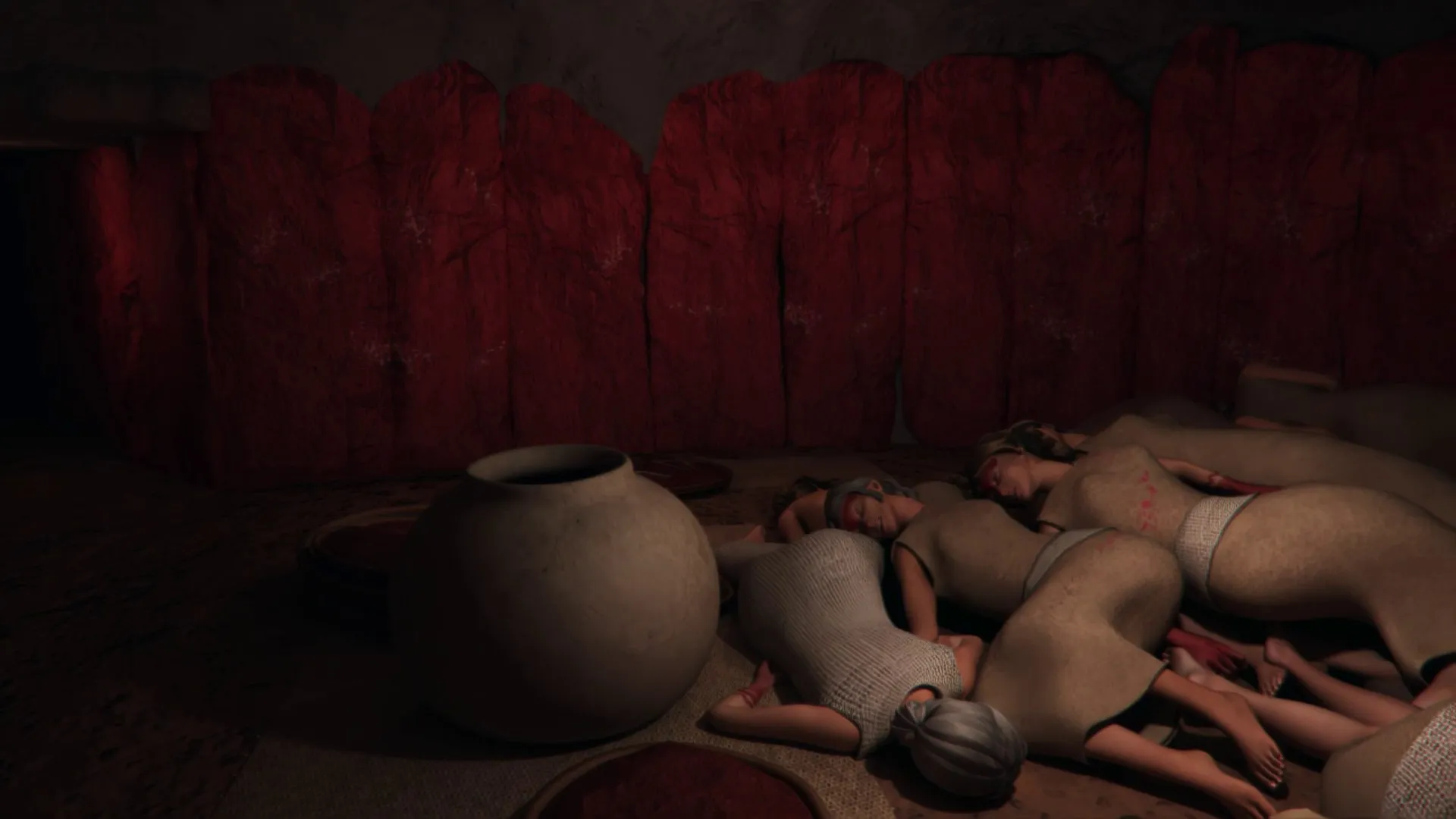
Digitisation and 3D reconstruction
Photogrammetry and LiDAR scanning of objects, monuments and archaeological sites; 3D reconstruction from historical sources; 4D content that shows how a space has changed over time; digital restoration and anastylosis.
We deliver models suitable for conservation, research, web viewers, augmented reality and virtual reality.
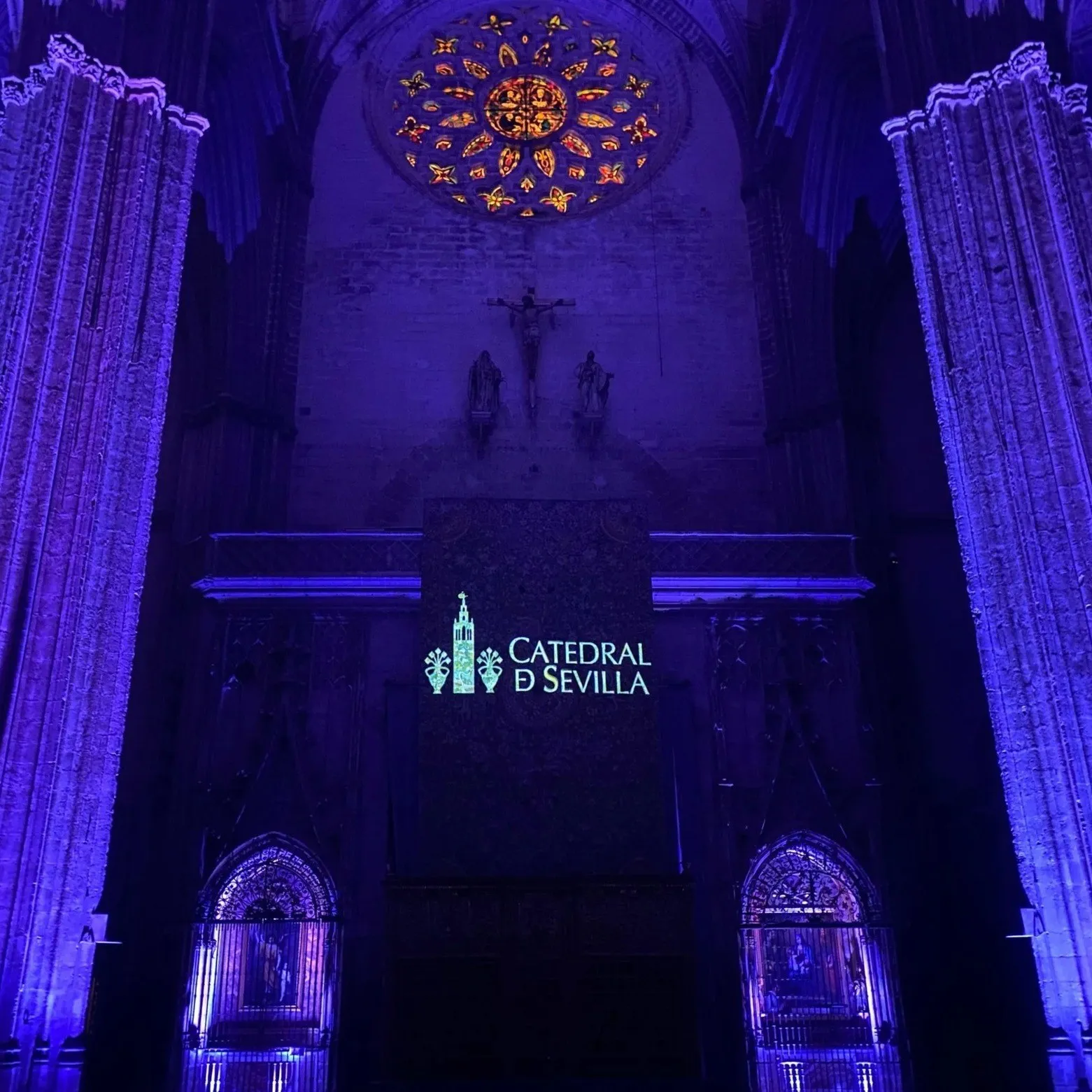
Immersive rooms and video mapping
Projection onto walls, floors and façades to tell the story of a place in the place itself.
From an interpretation room to a night-time show on a monument.
Apps and audiovisual
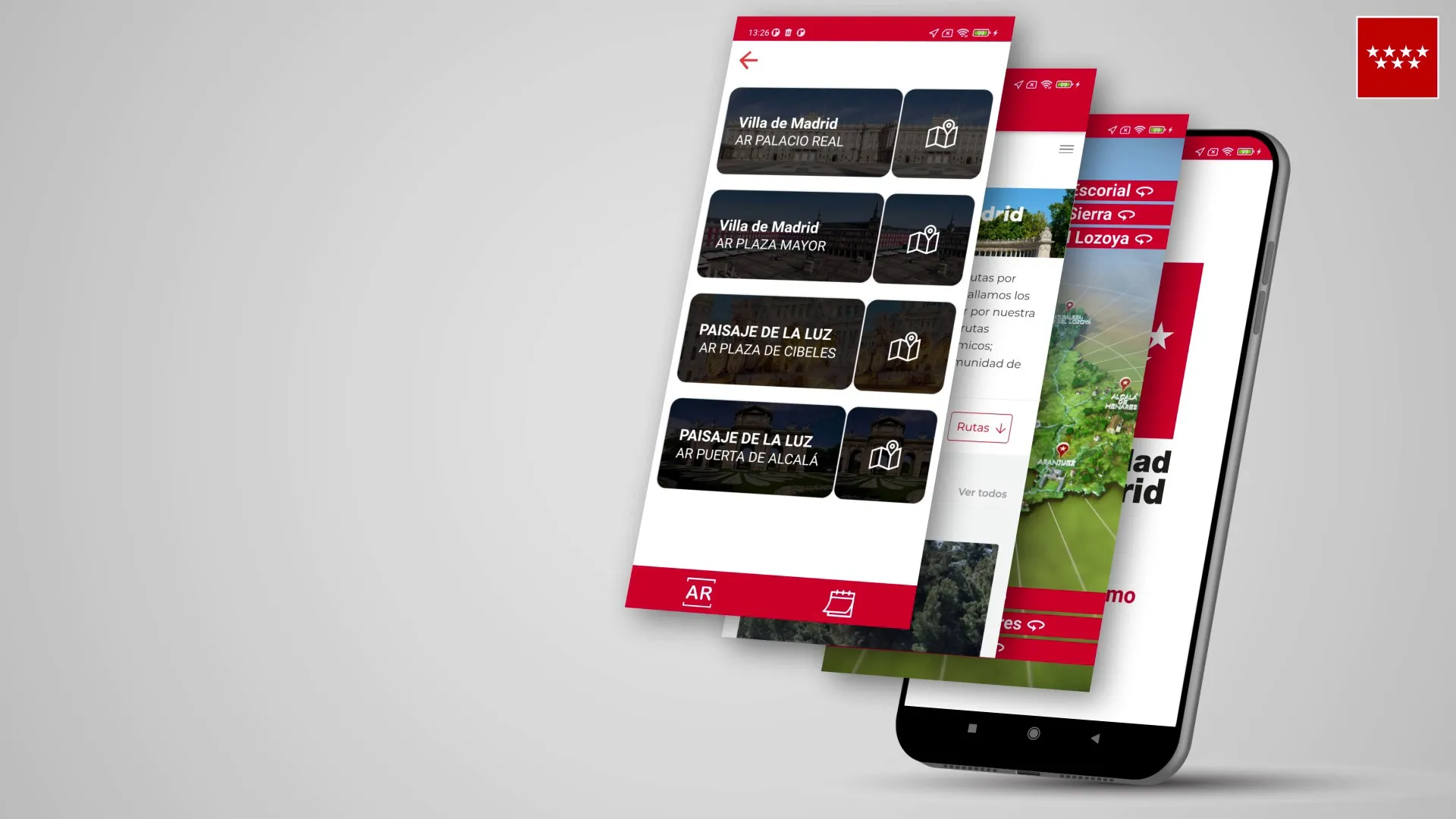
iOS and Android apps published in the stores, museum guides, 360° virtual tours and video production in 4K, 8K, 360° and drone, with script, voice-over, dubbing and effects.
02 — Devices and technology
Devices
VR headsets
- Meta Quest 3
- Quest 3S
- Quest 2
- Apple Vision Pro
Phones and tablets
- Native apps for iPhone, iPad and Android
- Augmented reality in the browser (WebAR), nothing to install
Web
- 3D viewers
- Virtual tours
- Viewpoints built on our own technology
Installations
- Touch screens
- Projection and video mapping
- Immersive rooms
- Holograms in display cases
Technology
Engines
- Unreal Engine 5
- Unity
Virtual and augmented reality
- Meta Spatial SDK
- Meta XR SDK
- OpenXR
- Apple visionOS (RealityKit, SwiftUI)
- ARKit
- ARCore
- WebAR
- Meta Horizon Store
Web 3D
- WebGL
- three.js (our own viewers, tours and viewpoints)
Modelling and animation
- Blender
- 3ds Max
- LightWave 3D
Capture and digitisation
- Photogrammetry
- LiDAR scanning
- Gaussian splatting
Software development
- Native iOS and Android apps
- Flutter
- Web and backend
- Geolocation and maps
- Multilingual audio guides
- Our own content management system
- App Store and Google Play
- Accessibility RD 1112/2018
Audiovisual
- 4K, 8K, 360° and drone production
- Green screen filming
- Post-production and effects with After Effects
03 — What every project includes
Historical rigour, with historians on staff
Every reconstruction, text and voice-over is worked on by our team of historians, with the sources and with the institution's specialists: curators, archaeologists, archivists. The rigour reaches the detail: a character's clothing, the pottery on a table, the colour of a wall. Hypotheses are documented and kept apart from what is proven.
Accessibility as standard
Subtitles, audio description, easy reading, contrast and navigation designed for people with reduced mobility or who cannot use a headset standing up. Virtual tours also make it possible to visit spaces that cannot be physically adapted. We meet the accessibility requirements of public procurement.
Every language the destination needs
Texts, voice-overs and subtitles in the project's languages, with professional translation and dubbing, managed from a single content source so that updating one does not break the others.
Our own capture equipment
Our own 360° cameras, drone, photogrammetry and LiDAR scanning equipment. We do the capture ourselves, on site and when the project requires it, without depending on third parties.
The content belongs to the institution
We deliver the 3D models, point clouds, videos and sources in standard formats (glTF/GLB, OBJ, FBX, LAS/E57, master video) so that the institution can keep them, reuse them in future projects and make them available to researchers.
Training and maintenance
We train the staff who will run the installation and provide support and content updates while it is in operation, within the timescales set by the contract.
04 — How we work
We listen to the project
We visit the space, talk to the people who know the content (curators, tourism officers, historians) and define what the visitor should feel before choosing any technology.
We document and capture
Our historians work on the sources with the institution's specialists, and we capture the space with our own equipment: photogrammetry, LiDAR, 360° cameras and drone. What is reconstructed is reconstructed with rigour, down to the detail of the clothing or the pottery, and hypotheses are documented.
We model and develop
3D reconstruction, audiovisual production and development for the right device: VR headsets, phones and tablets, web, screens and gallery installations.
We install and maintain
Setting up on site, staff training, support during operation and content updates when the narrative changes.
A single point of contact from start to finish, and our own modelling, development and audiovisual production team in Seville.
05 — Artificial intelligence
Artificial intelligence, human judgement
We use artificial intelligence in software development and in various 3D production tasks. We combine it with manual modelling, rendering and the tools we use to shape each project.
The team leads the work, makes the creative decisions and reviews the results. We choose where AI adds value and which tasks need manual work, depending on what each project needs.
Shall we talk about your project?
Tell us about the project and we will suggest how to make it visible. You can also try a demo with headsets at our office in Seville.